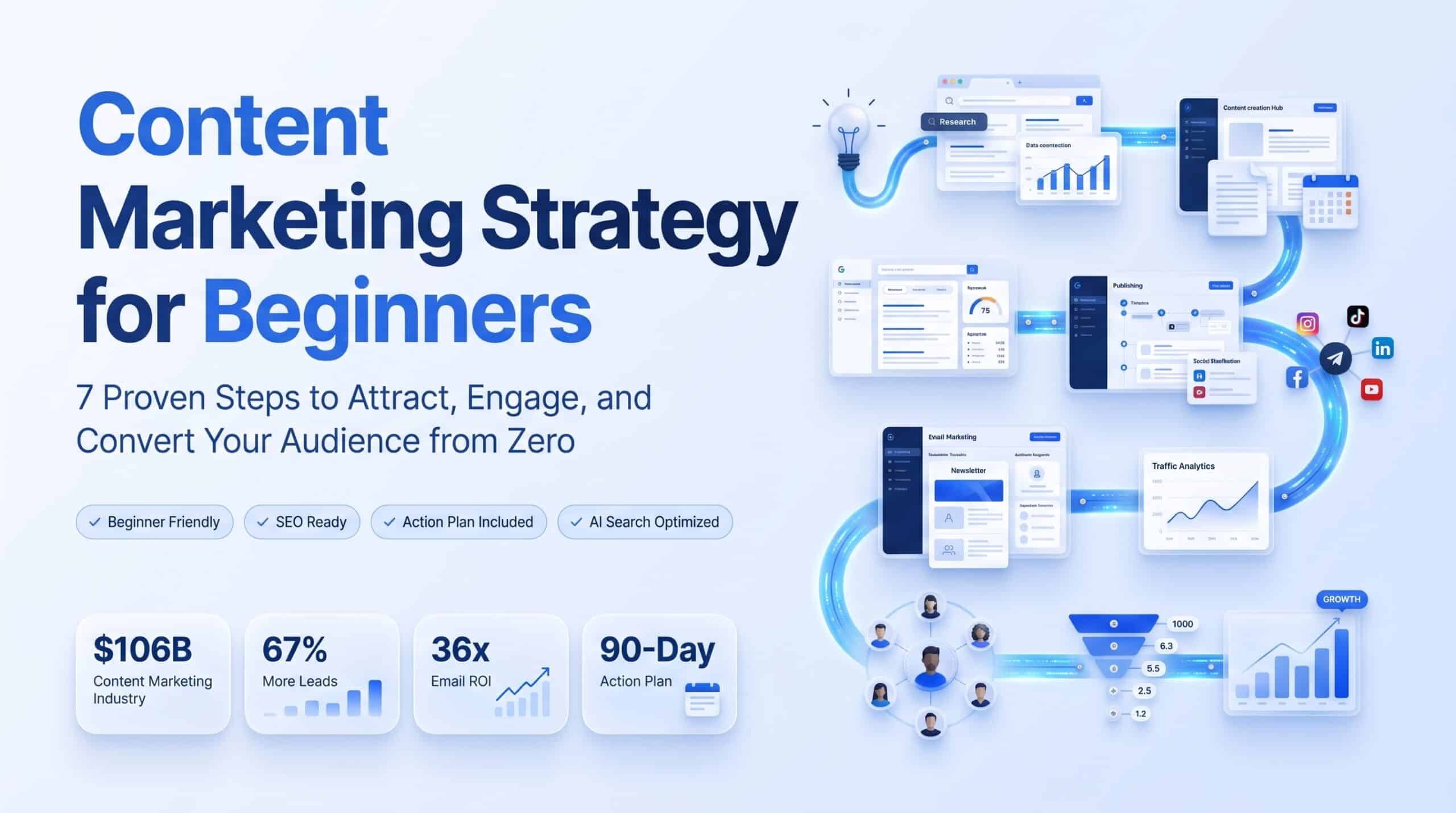
Content Marketing Strategy for Beginners: 7 Proven Steps to Follow
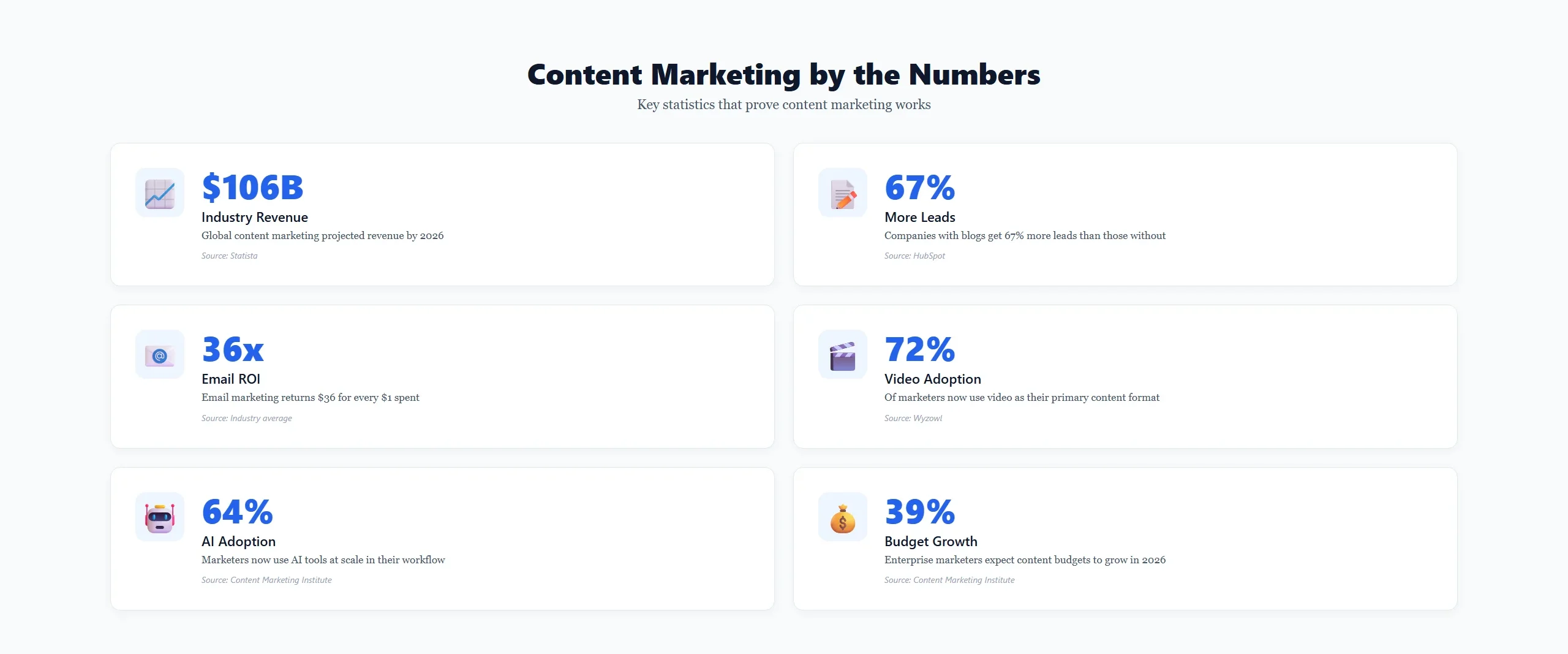
Content marketing is the practice of creating and distributing valuable content to attract and retain a clearly defined audience. The global content marketing industry is projected to reach $106 billion in revenue by 2026 according to Statista. Companies that publish blog posts get 67% more leads than those that do not according to HubSpot. If you are new to this space, building a content marketing strategy for beginners is the single most important step you can take.
What Is a Content Marketing Strategy for Beginners?
A content marketing strategy is a documented plan that outlines who you are writing for, what you will create, how you will distribute it, and how you will measure success. Without a strategy, you are publishing randomly and hoping something sticks. With a strategy, every piece of content has a purpose and a target.
As of 2026, 39% of enterprise marketers say their content budgets will grow according to the Content Marketing Institute. About 64% of marketers now use AI tools at scale. The opportunity has never been bigger.
If you are just starting out, focus on one format first. The biggest mistake beginners make with a content marketing strategy for beginners is trying to be everywhere at once.

Why Content Marketing Matters for Beginners
Paid ads stop working the moment you stop paying. A well-written article keeps bringing visitors for years. That is the core advantage of a content marketing strategy for beginners. It compounds over time. Read our comprehensive guide on content marketing for the fundamentals.
Email marketing returns $36 for every dollar spent. A solid content marketing strategy for beginners focuses on earning trust before asking for the sale. That trust compounds with every piece you publish.
Content Marketing Strategy for Beginners: The 5-Step Framework
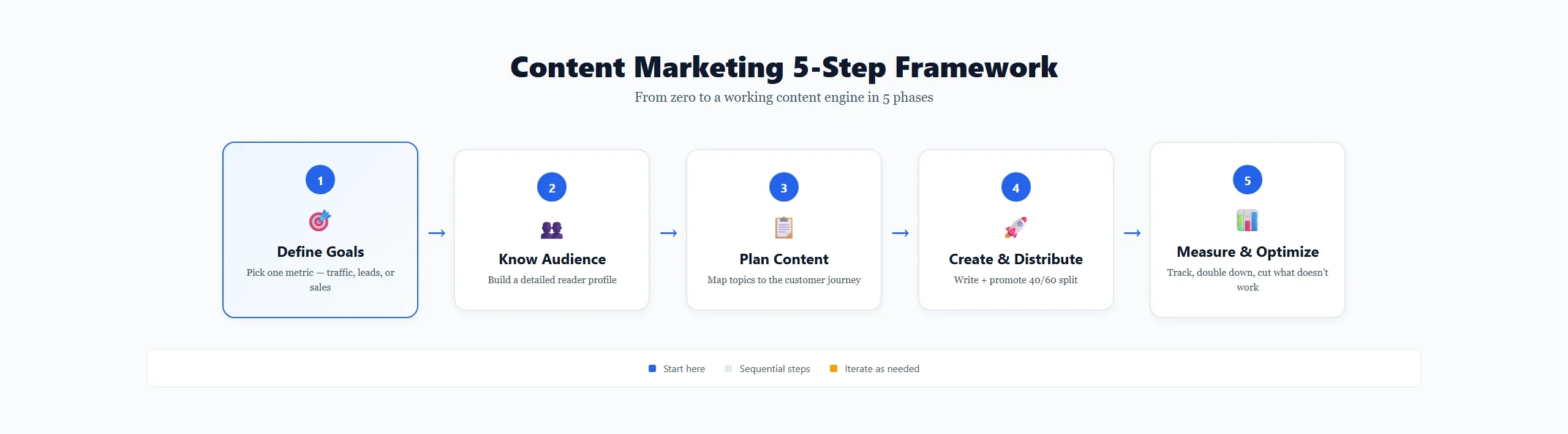
Most beginners skip strategy and jump to writing. That is a mistake. Follow this content marketing strategy for beginners framework.
Step 1: Define Your Goals
Pick one measurable target. “Get 500 monthly visitors from Google within 90 days” beats “get more traffic.” Common goals include brand awareness, lead generation, and sales. Read our guide on SMART marketing goals.
Step 2: Know Your Audience
Create a detailed profile of the person you are writing for. What problems do they have? What questions do they search for? A B2B audience wants detailed guides. A consumer audience wants quick tips. Use analytics to gather data about who engages with your brand.
Step 3: Plan Your Content
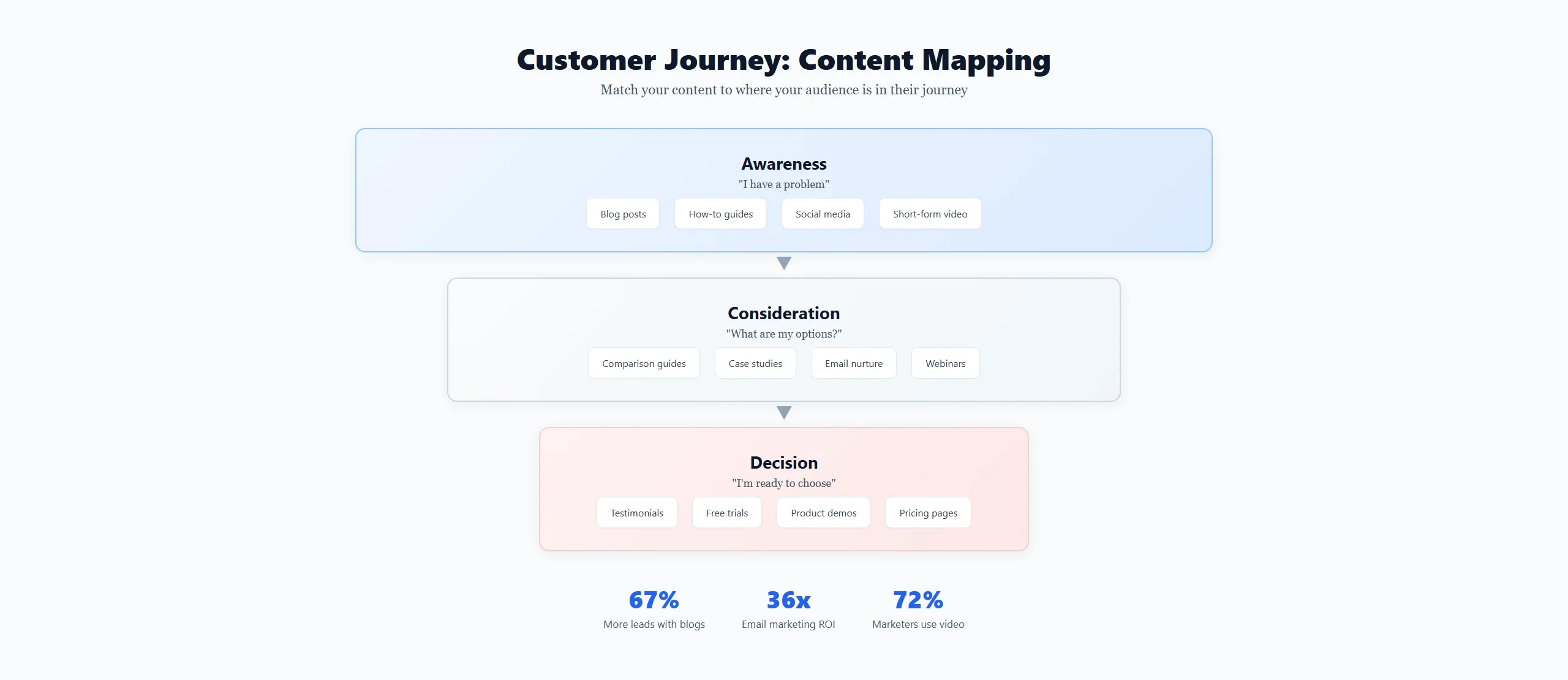
Map topics to each stage of the customer journey. The awareness stage needs educational content. The consideration stage needs comparison guides. The decision stage needs testimonials. Use keyword research to find topics people search for. A proper content marketing strategy for beginners maps content to each stage. Understand the key components of a digital marketing strategy.
Step 4: Create and Distribute
Write the content, then promote it where your audience spends time. Most beginners spend 90% of time creating and 10% promoting. Flip that to 40-60. Distribution channels include social media, email, and SEO. This content marketing strategy for beginners tip alone will improve your results. Read our email marketing strategies guide.
Step 5: Measure and Optimize
Track traffic, engagement, conversions, and rankings. Double what works. Cut what does not. The first 90 days are about learning. As a result, use analytics tools to find what drives value. Read our guide on digital marketing analytics.
Content Types That Work Best in 2026
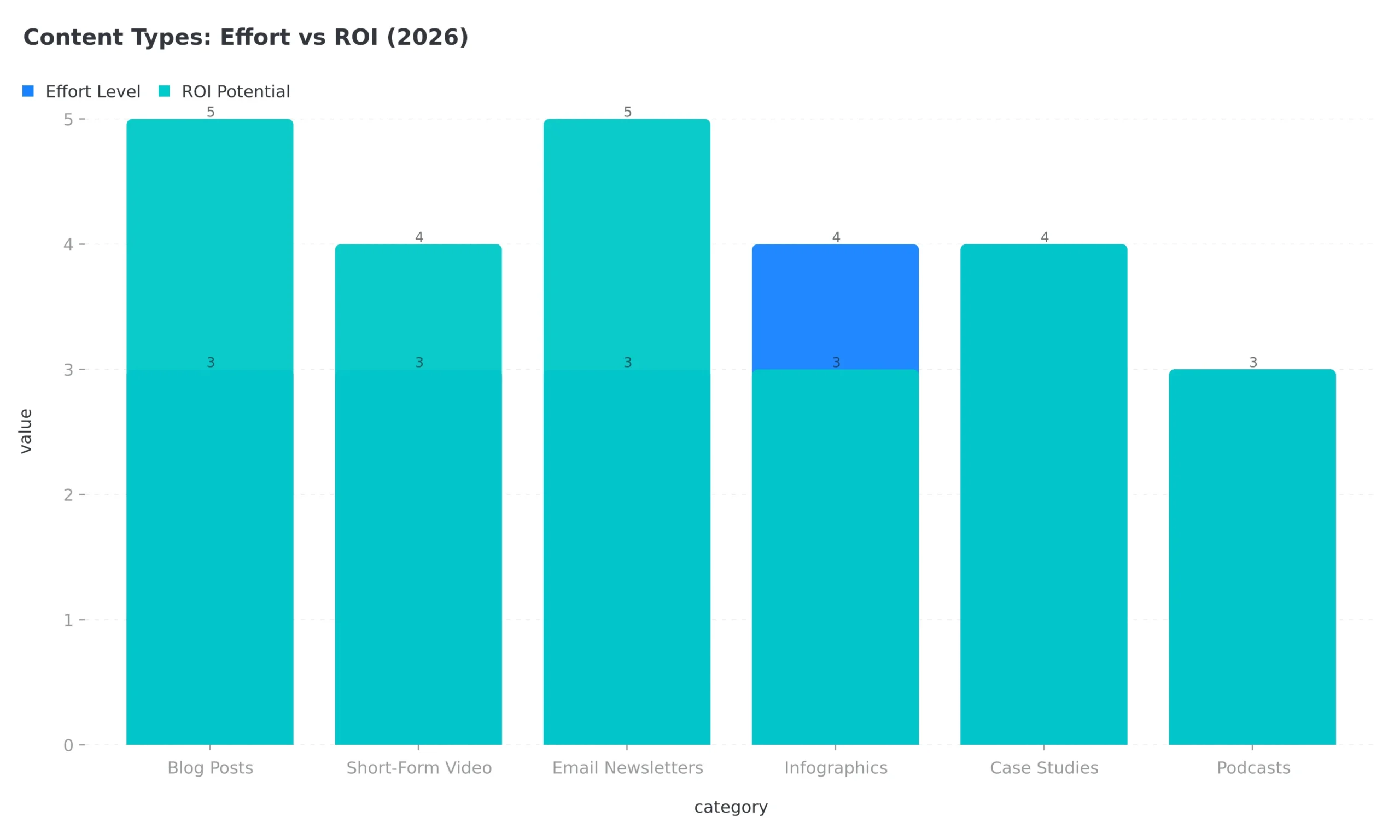
Different formats serve different goals. Here is how the major content types compare.
| Content Type | Best For | Effort Level | ROI Potential |
|---|---|---|---|
| Blog Posts | SEO traffic, authority building | Medium | High — compounds over years |
| Short-Form Video | Social reach, brand awareness | Medium | High — best engagement rates |
| Email Newsletters | Lead nurturing, direct sales | Medium | Highest — $36 per $1 spent |
| Infographics | Shares, backlinks | High | Medium — good for link building |
| Case Studies | High-ticket conversions | High | High — closes deals |
| Podcasts | Audience depth, relationship | Medium | Medium — slow burn |
Video is the dominant format in 2026 for any content marketing strategy for beginners. According to Wyzowl, 72% of marketers use video content. Short-form video on Instagram Reels, TikTok, and YouTube Shorts drives the highest engagement. For social media, read our social media marketing techniques guide. For example, storytelling in content marketing strategy for beginners works because people connect with stories more than statistics. Read our storytelling in content marketing guide.
Common Mistakes Beginners Make
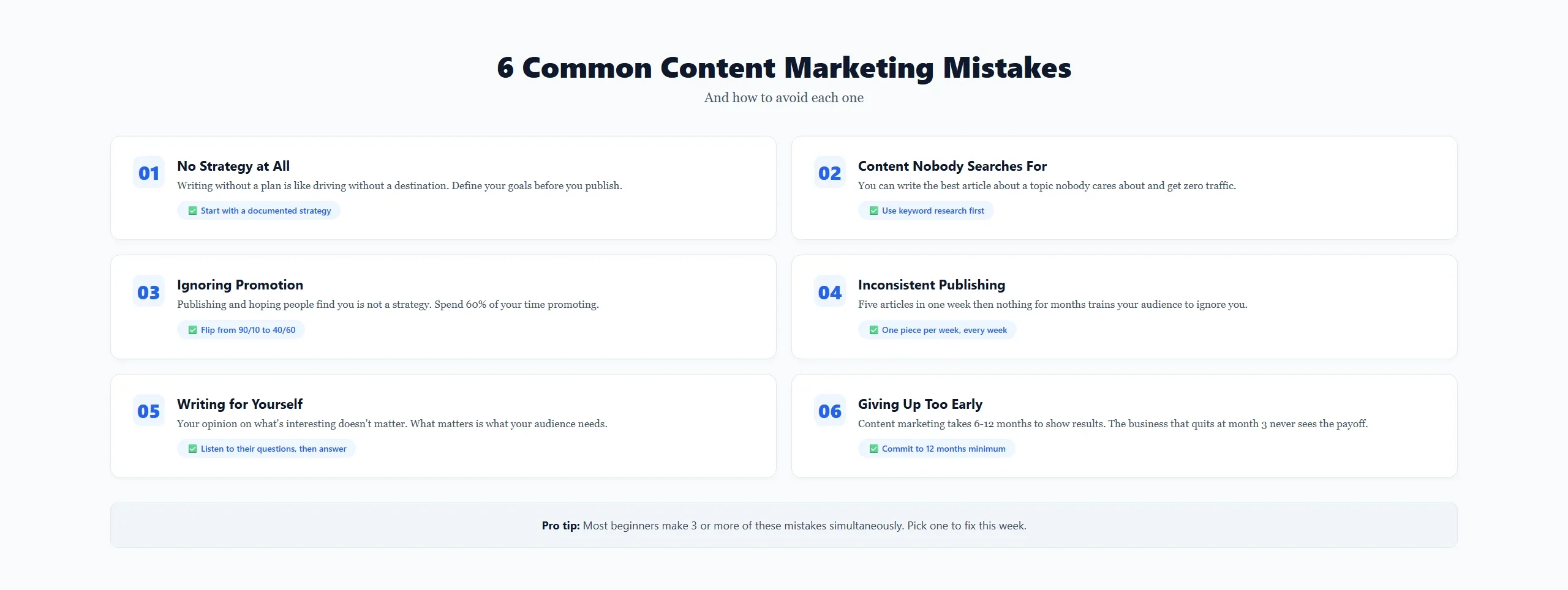
After working with dozens of businesses, these patterns consistently waste time and money.
- No content strategy at all. Writing without a content marketing strategy for beginners is like driving without a destination. Define your goals first.
- Creating content nobody searches for. You can write the best article about a topic nobody cares about and it will get zero traffic. Use keyword research tools before you start.
- Ignoring promotion. Publishing and hoping people find you is not a strategy. Share on social media, email your list, engage in communities where your audience hangs out.
- Inconsistent publishing. Publishing five articles in one week and then nothing for three months trains your audience to stop paying attention. One good piece per week beats ten pieces in a month followed by silence.
- Writing for yourself instead of your audience. Your opinion on what is interesting does not matter. What matters is what your audience needs to know. Listen to their questions and answer them.
- Giving up too early. Content marketing takes 6-12 months to show meaningful results. The business that quits at month three never sees the payoff.
Additionally, stay aware of common challenges in digital marketing to anticipate roadblocks.
How to Measure Content Marketing Success
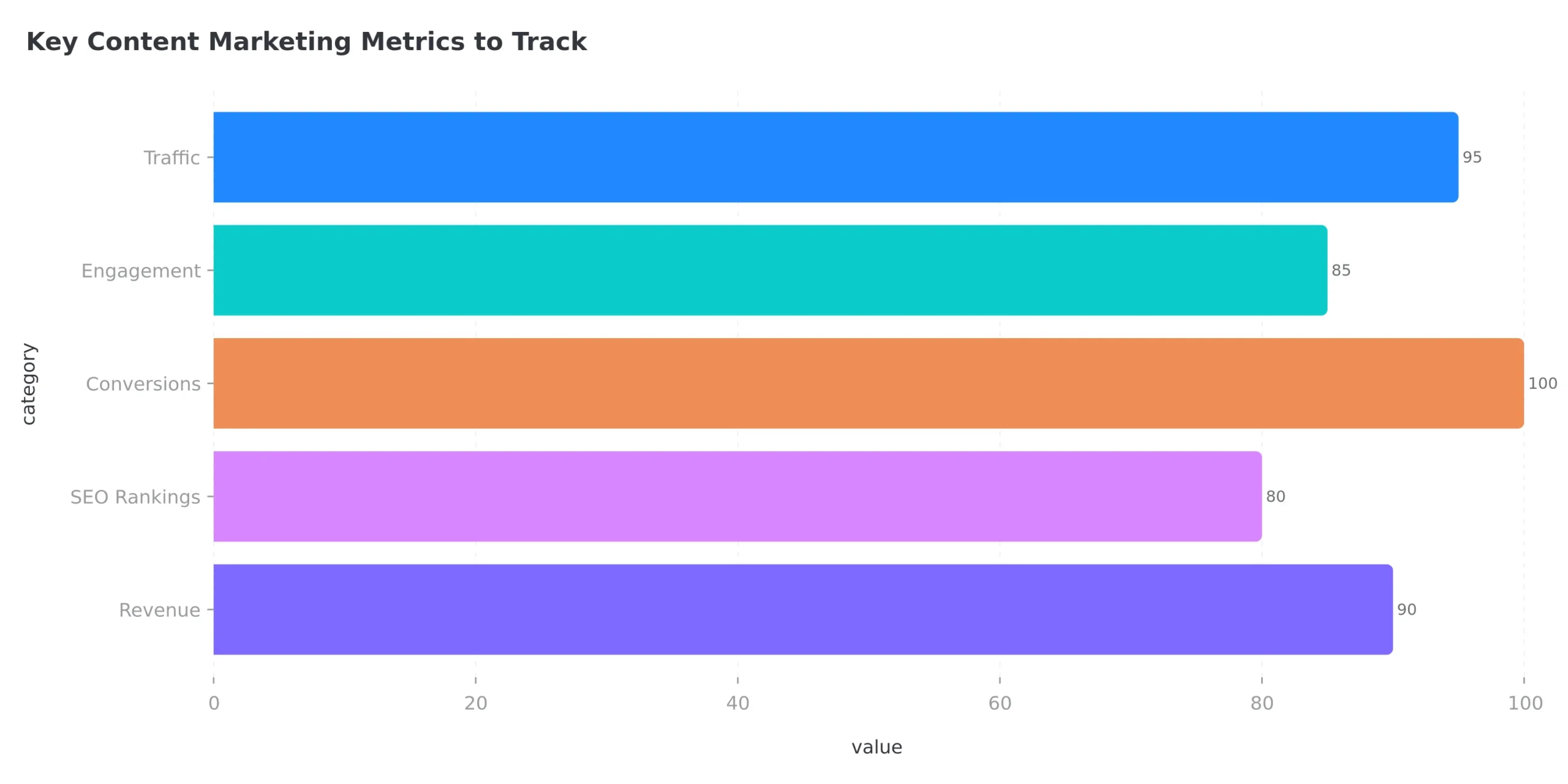
Measurement separates professionals from hobbyists. Track these from day one:
- Traffic: How many people visit your content?
- Engagement: Time on page, comments, shares.
- Conversions: Email signups, purchases, bookings.
- SEO Rankings: Are your keywords climbing or falling?
- Revenue: Does your content drive sales?
Read our guide on digital marketing analytics for a deeper look.
Frequently Asked Questions About Content Marketing for Beginners
Q: How much does content marketing cost for a beginner?
You can start with under $100 per month. A domain costs $12-15 per year. Hosting runs $10-30 per month. Free tools handle the rest. The main investment is your time. A content marketing strategy for beginners requires 10-15 hours per week to see results within six months.
Q: How long does it take to see results from content marketing?
Most businesses see measurable traffic within three to six months and meaningful lead generation within six to twelve months. SEO-driven content compounds over time. A post published today might rank on page five of Google, climb to page three by month three, and hit page one by month eight.
Q: Do I need a blog or can I use social media only?
Social media alone is risky because you do not own the platform. Algorithm changes can cut your reach overnight. A blog on your own domain is an asset you control. Use social media to distribute your content, but build your home base on your own site.
Q: How often should I publish content as a beginner?
Once per week is the minimum effective dose. Twice per week is better. Quality matters more than quantity. One well-researched article that ranks on Google beats ten shallow posts that nobody reads. Consistency matters most — publish on a predictable schedule and stick to it.
Q: What is the most important metric for content marketing?
Traffic matters, but conversions matter more. A page with 100 visitors and five conversions beats a page with 1,000 visitors and zero conversions. Track metrics tied to business goals: email signups, quote requests, product purchases. Vanity metrics like page views are useful but secondary.
Future Trends Shaping Content Marketing
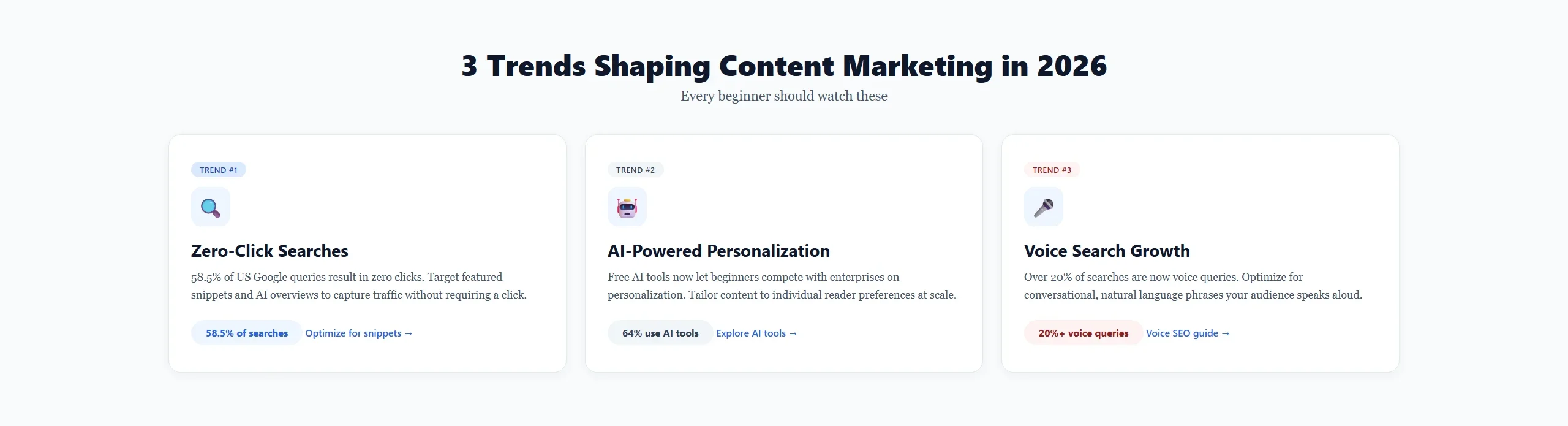
Three trends every beginner should watch in 2026:
- Zero-click searches: 58.5% of US Google queries result in zero clicks. Target featured snippets and AI overviews.
- AI-powered personalization: Free AI tools allow beginners to compete with enterprises on personalization.
- Voice search: Over 20% of searches are now voice queries. Read our voice search optimization guide.
Your First 90 Days: An Action Plan
Your first three months with a content marketing strategy for beginners:
- Month 1: Define your audience, set goals, choose one platform, write 4-5 posts.
- Month 2: Publish 1-2 pieces per week, build an email list, promote on social media.
- Month 3: Analyze what worked, double down on high-performing topics, repurpose content.
Plan your budget early. Our digital marketing budget guide can help.
Content marketing rewards patience, consistency, and genuine helpfulness. Start with one channel. Pick a format you can sustain. Answer real questions your audience is asking. The best time to start was six months ago. The second best time is today.