7 Proven Secrets Behind Viral Social Media Posts in 2026 (Backed by Data)

Every brand wants to crack the code of viral social media posts. You post, you wait, you get 47 impressions and a like from your mom. We already covered the 10 basic strategies for viral posts. This goes deeper — into the data, the psychology, and what’s changed in 2026.
Meanwhile, someone’s cat video hits 4 million views in 12 hours. It feels random. It’s not.
We pulled data from Socialinsider’s 70-million-post analysis, Wyzowl’s 2026 video marketing report, HubSpot’s State of Marketing, and Jonah Berger’s research from the Wharton School. Plus we ran the numbers on what actually drove viral social media posts in 2025-2026. Here’s what the data says.
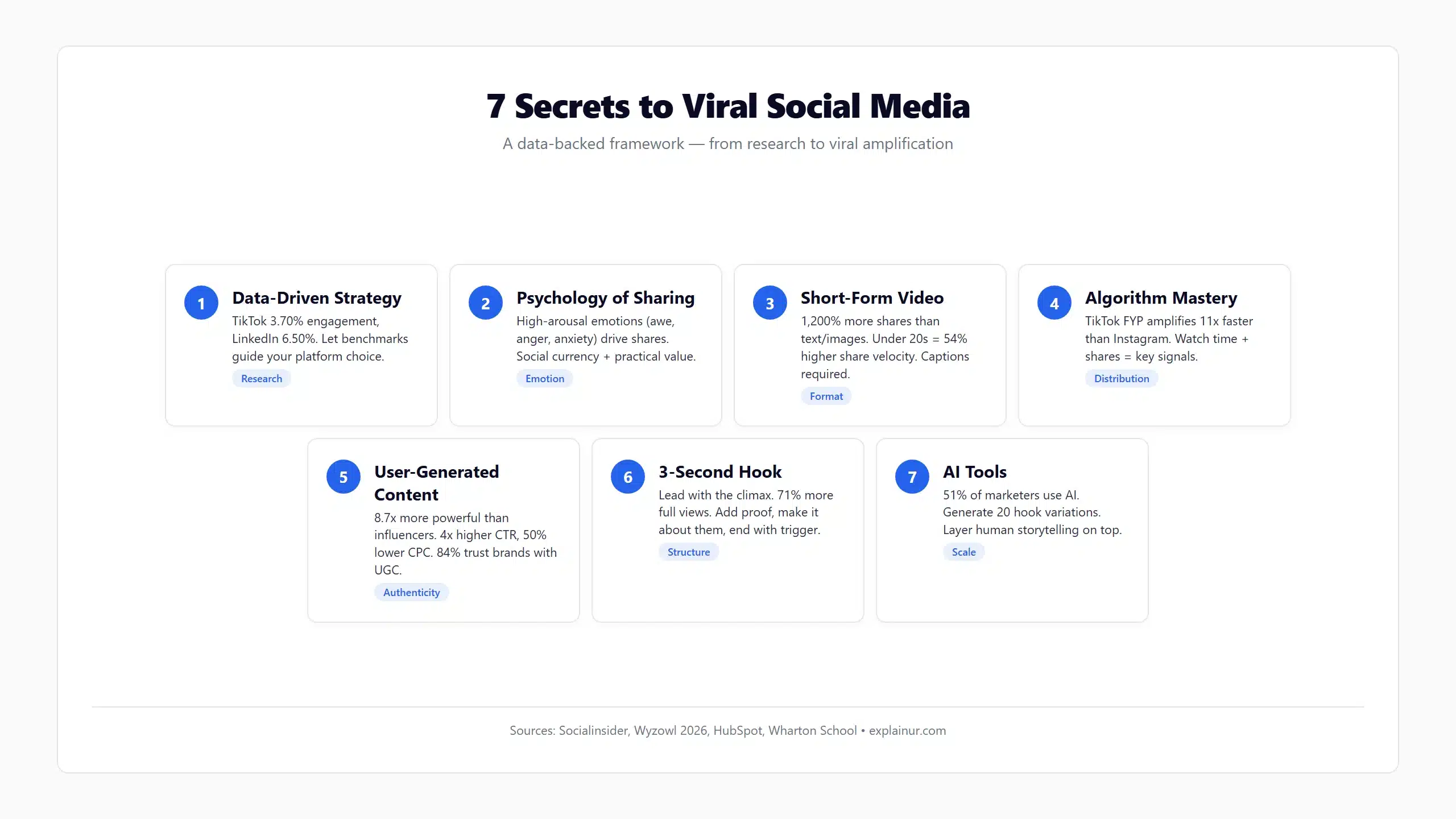
Secrets at a Glance
- 1. What the Data Says About Viral Social Media Posts in 2026
- 2. The Psychology: Why People Share
- 3. Short-Form Video Is the Only Format That Matters
- 4. How Algorithms Decide What Goes Viral
- 5. User-Generated Content Beats Polished Brand Content
- 6. The 3-Second Hook: Structure Viral Posts Like This
- 7. AI Tools Changed the Game
- Frequently Asked Questions
1. What the Data Says About Viral Social Media Posts in 2026
Let’s kill a myth first. You don’t need a million followers to create viral social media posts. TikTok’s algorithm doesn’t care about your follower count. It cares about whether people stop scrolling.
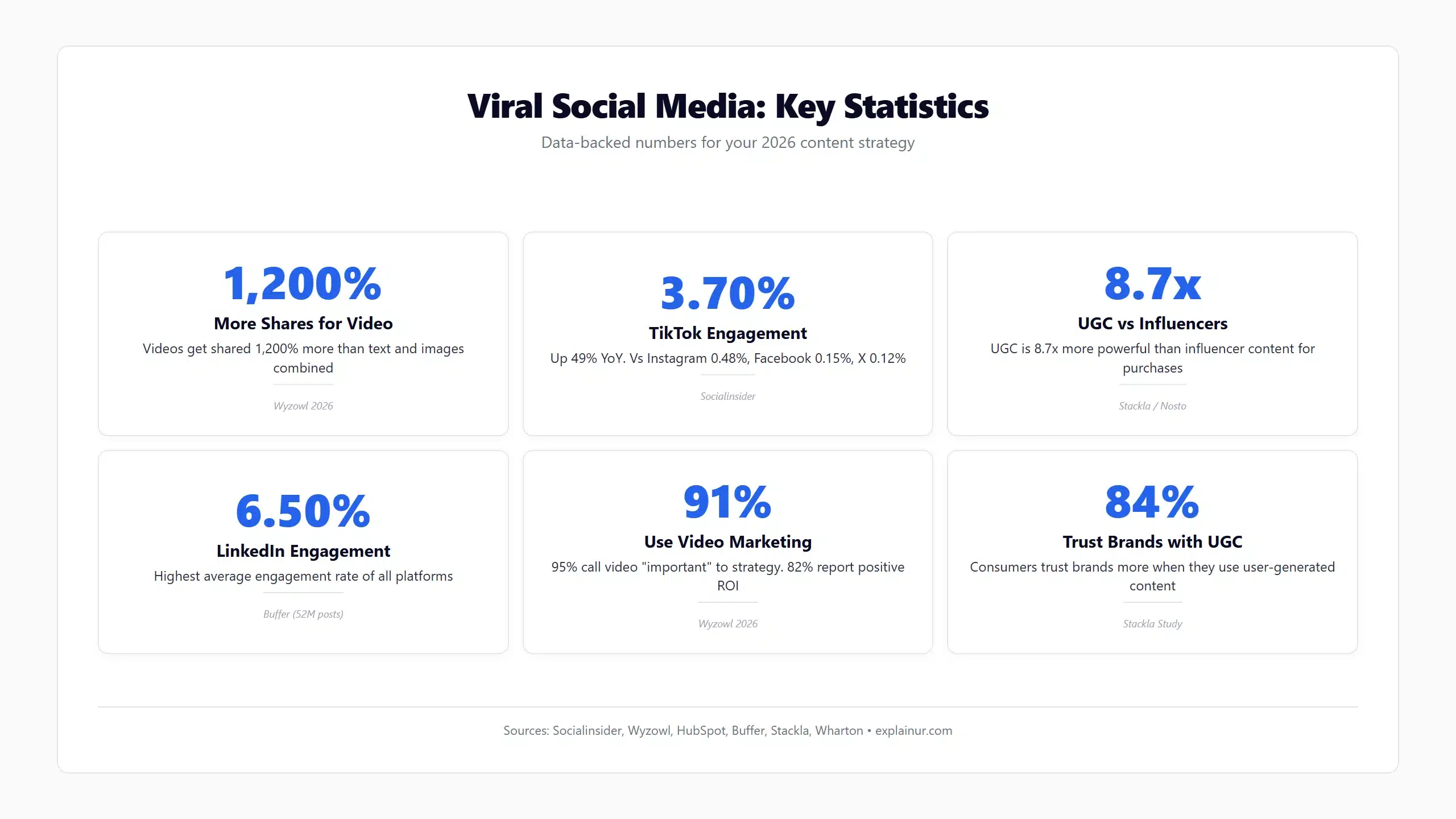
Socialinsider analyzed 70 million posts across Facebook, Instagram, TikTok, and X. The findings are stark: TikTok’s average engagement rate hit 3.70% in 2025, up 49% year-over-year. Instagram sat at 0.48%. Facebook dropped to 0.15%. X fell to 0.12%. Viral social media posts on TikTok outperform every other platform by a wide margin.
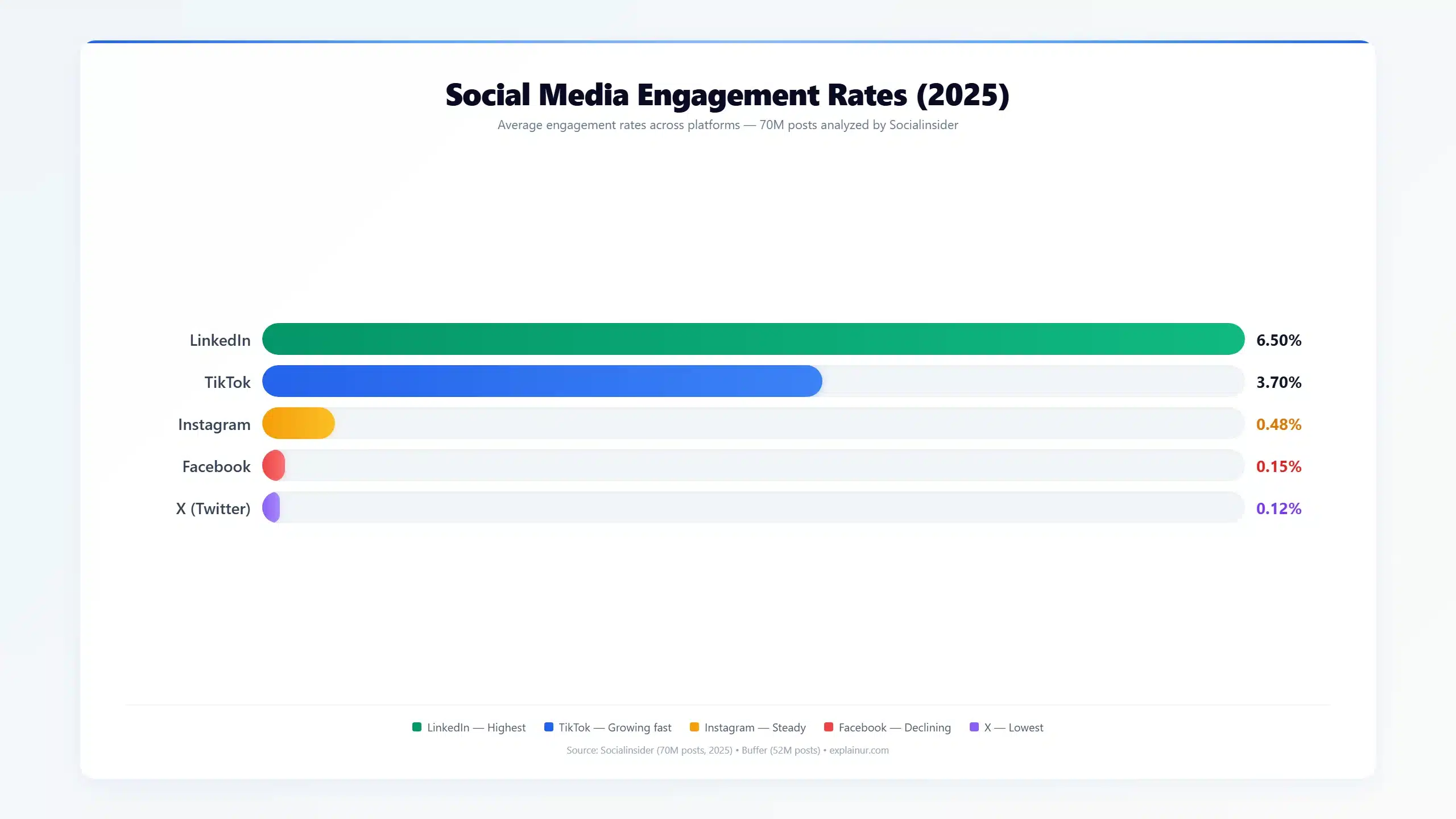
LinkedIn is the dark horse. It leads all platforms with an average engagement rate of 6.50% — growing from 6% to 8.01% over the same period, per Buffer’s analysis of 52 million posts.
More shares for video than text and images combined
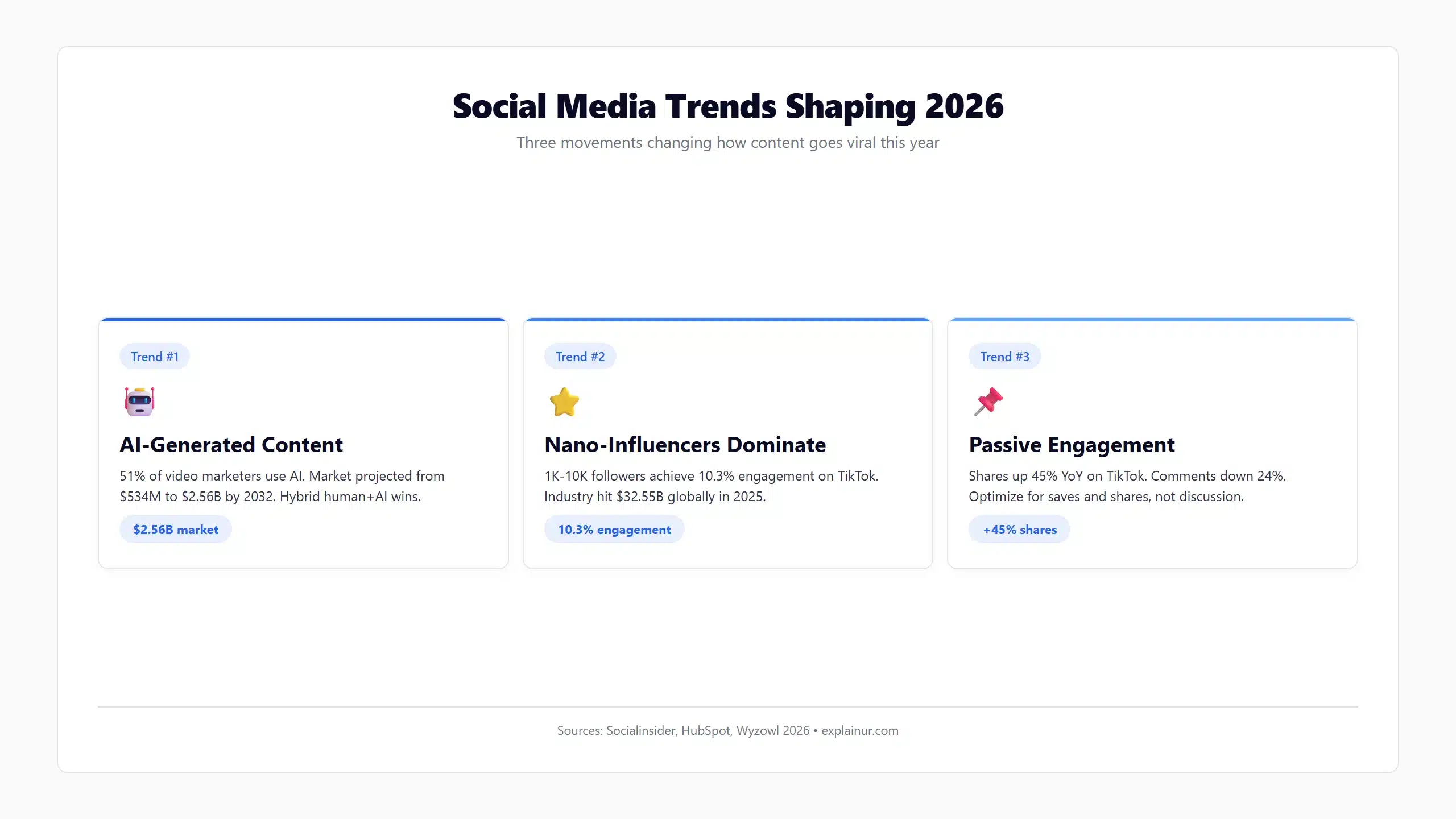
Shares per post grew 45% year-over-year on TikTok. Instagram saw a 12% increase. But comments fell 24% on TikTok and 16% on Instagram. The takeaway? People are sharing more but talking less. Passive engagement (saves, shares) is replacing active discussion.
The influencer marketing industry hit $32.55 billion globally in 2025. That’s 35% growth from 2024’s $24 billion. Brands aren’t spending that money because it’s trendy. They’re spending it because nano-influencers (1K-10K followers) pull a 10.3% engagement rate on TikTok versus Instagram’s 1.73% for the same tier.
2. The Psychology: Why People Share
Jonah Berger and Katherine Milkman analyzed nearly 7,000 New York Times articles. Their finding: high-arousal emotions drive sharing. Not just positive feelings. Awe, anger, anxiety — anything that gets the heart rate up outperforms low-arousal content.
Content inspiring awe gets shared more than any other emotional category. Anger-inducing posts travel further than sadness-inducing ones because arousal is the engine, not valence.
Four psychological drivers explain most viral social media posts:
Social currency. People share what makes them look smart, funny, or in-the-know. A thought-provoking insight about AI marketing gets shared because it signals expertise. Posting a meme about Monday mornings says “I’m relatable.”
Emotional resonance. 84% of users share content to express things they care about, per a New York Times Customer Insight Group study. Your post succeeds when it gives people a vehicle for their own identity.
Practical value. Useful content gets shared because sharing it makes the sharer look helpful. Listicles, how-to guides, and tool recommendations travel through DMs and group chats.
Story beats information. A customer transformation story will outperform a feature list every time. Stories activate mirror neurons. People don’t remember your product specs — they remember how your product made someone feel. We break this down more in our guide to storytelling in content marketing.
3. Short-Form Video Is the Only Format That Matters
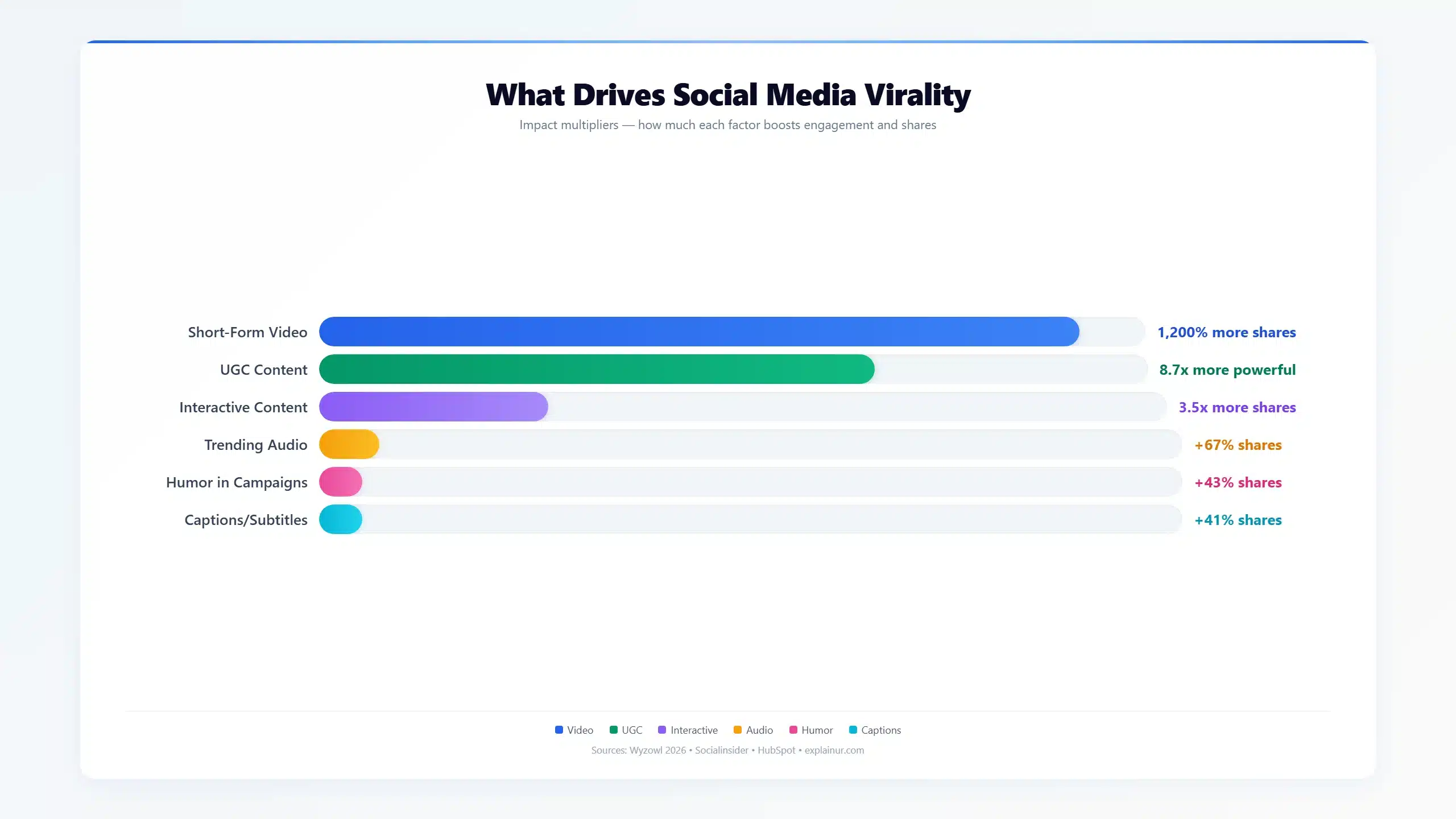
Here’s a number that should change your strategy for viral social media posts: social media videos get shared 1,200% more than text and image posts combined. Not 200%. One thousand two hundred percent.
Wyzowl’s 2026 report shows 91% of businesses now use video as a marketing tool. 95% of marketers call it “important” to their strategy. 82% report positive ROI. For more on social media marketing techniques that pair with video, check our full guide.
But not all video works the same. Short-form under 30 seconds dominates. TikTok videos under 20 seconds achieve 54% higher share velocity. Instagram Reels deliver 35% more engagement than standard posts. Carousels on Instagram generate 1.4x more engagement than single images, but Reels produce 2.3x higher engagement.
Three non-negotiable rules for viral video in 2026:
- Captions or you lose 41% of shares. Content with subtitles gets shared 41% more. Most people watch without sound. If your video needs audio to make sense, it won’t spread.
- First 3 seconds or nothing. Social videos with a strong hook in the first 3 seconds get 71% more full views. Lead with the climax, not the setup.
- Trending audio is rocket fuel. TikTok videos using trending audio get shared 67% more often. Check TikTok’s Creative Center daily. Build your content around sounds that are already gaining momentum.
4. How Algorithms Decide What Goes Viral
The algorithm doesn’t care about your production quality. It cares about signals.
TikTok’s For You Page evaluates every video against thousands of signals in the first hour. The most important: watch time, replays, shares, and comment sentiment. If the algorithm sees people watching your video multiple times or sharing it externally, it expands the distribution loop. Pair this with platform-specific social media strategies for maximum impact.
This is why TikTok amplifies viral content 11x faster than Instagram’s algorithm, per industry analysis. Instagram’s Explore page requires a baseline of follower engagement first. TikTok’s FYP is a meritocracy of content quality.
LinkedIn’s algorithm in 2026 prioritizes personal narratives over corporate announcements. Posts written in first person with a specific lesson get 3-4x the reach of brand-page updates. Comments carry 15x more algorithmic weight than likes on LinkedIn.
Facebook’s algorithm has shifted toward “meaningful social interaction.” Posts that spark conversation in comments — especially replies between friends — get prioritized. Broadcast-style content gets buried.
5. User-Generated Content Beats Polished Brand Content
This is the single most actionable finding in our research on viral social media posts. User-generated content outperforms branded content across every metric that matters.
More powerful than influencer content in driving purchase decisions
UGC-based ads receive 4x higher click-through rates and cost 50% less per click. UGC on product pages increases conversion rates by up to 200%. Websites featuring UGC see a 90% increase in time spent on site. When combined with paid social media advertising, UGC amplifies results further.
Why? Because 60% of consumers consider UGC the most authentic form of marketing. Only 17% say the same about branded content. People trust other people more than they trust your design team.
Brands that run structured viral campaigns report 22% lower customer acquisition costs. Every dollar invested in UGC-driven campaigns returns an estimated $4, with content production costs dropping 70% versus traditional shoots.
The #EyesLipsFace campaign from e.l.f. Cosmetics is the textbook case. It generated 4 billion views and 5 million user-generated videos on TikTok. Not because e.l.f. made great ads. Because they built a framework for other people to make content for them.
6. The 3-Second Hook: Structure Viral Posts Like This
Most people structure their viral social media posts backward. They build context, introduce the topic, then deliver the payoff. Viral posts invert that.
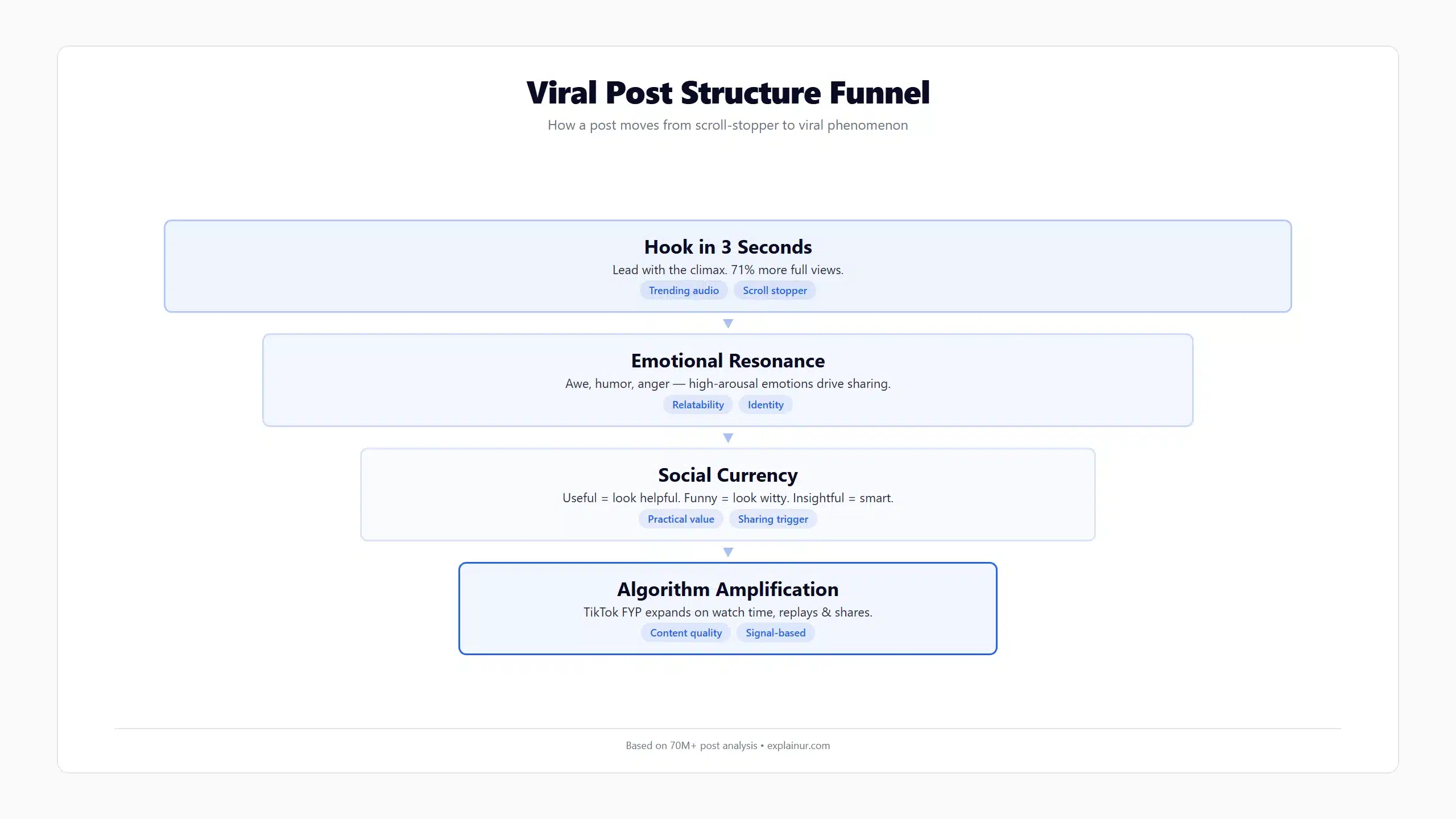
Here’s the framework that consistently outperforms:
Open with the climax. State the most surprising, useful, or controversial thing first. Not “We tried 5 strategies for social media growth.” Say “We tried 5 strategies. One of them grew our engagement 340% in 2 weeks. The other 4 did nothing.”
Add the proof. Screenshots, data, before-and-after. Show receipts. A social media growth claim without a screenshot gets ignored. With a screenshot, it gets saved and shared.
Make it about them. The fastest way to kill a viral post is to make it about your brand. Make it about the reader’s problem, identity, or ambition. A post titled “How we grew our newsletter to 50K subscribers” underperforms “The exact email sequence that got 50K people to trust a stranger.” Both describe the same thing. One makes the reader the protagonist.
End with a sharing trigger. “Tag someone who needs to see this” works. But “Share this with one person who’s trying to figure out X” works better because it gives the sharer a specific identity — helpful, knowledgeable, generous.
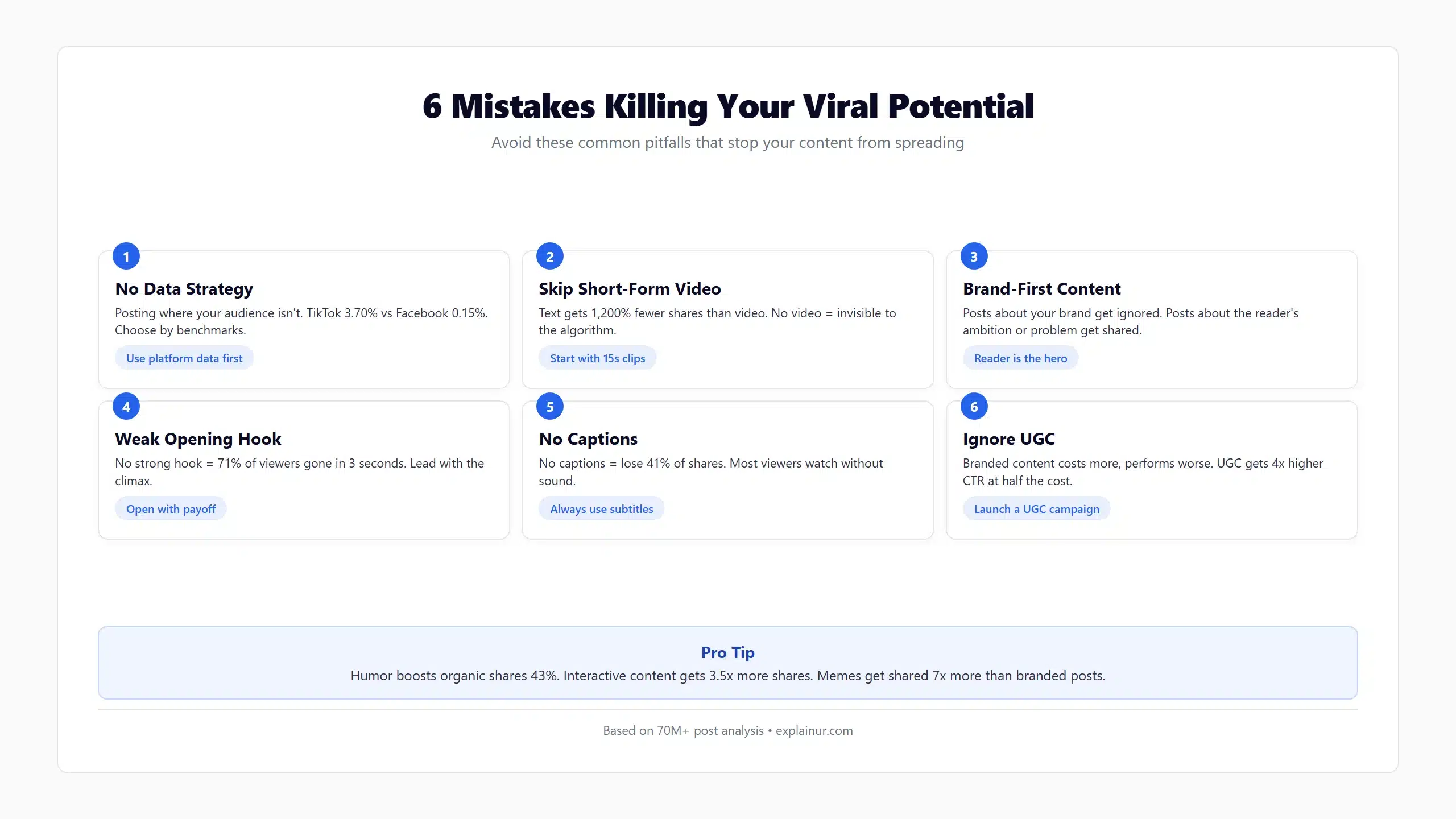
Campaigns using humor are 43% more likely to receive organic shares. Interactive content (polls, quizzes, challenges) produces 3.5x more shares than static posts. Memes are shared 7x more than standard branded posts.
7. AI Tools Changed the Game (Here’s How to Use Them)
51% of video marketers now use AI tools for video creation or editing. The global AI video generator market is projected to grow from $534.4 million in 2024 to $2.562 billion by 2032.
Here’s what that means for viral social media posts: the barrier to producing high-quality short-form video has collapsed. You no longer need a camera crew or editing software. You need a script and 20 minutes.
But here’s the trap. AI-generated content without human editing gets flagged as generic by both algorithms and audiences. HubSpot’s State of Marketing report shows 75% of marketers use AI for media creation. The ones winning aren’t using AI to replace creativity — they’re using it to accelerate testing.
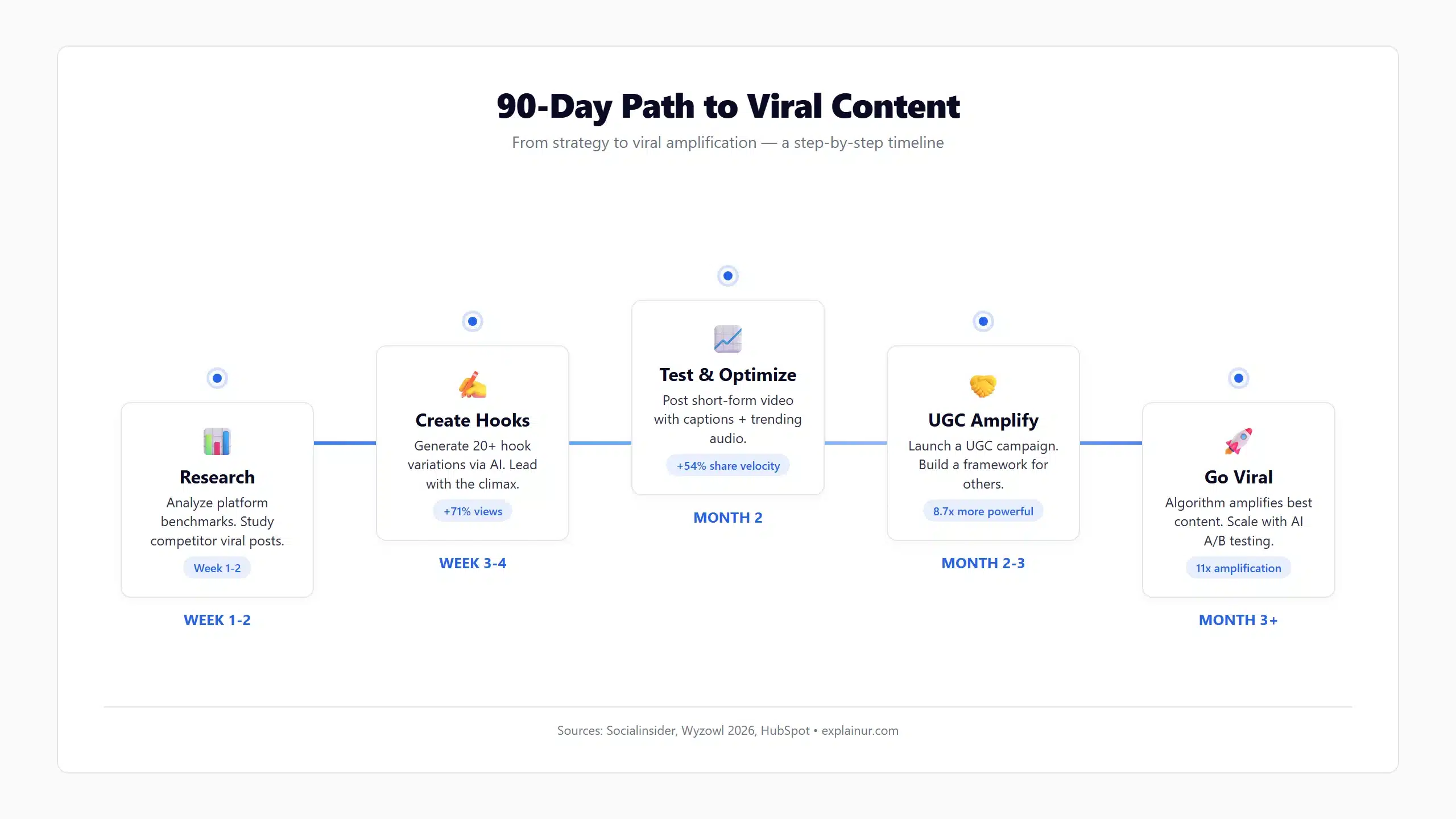
The smartest approach is hybrid. Use AI to generate 20 hook variations. Test them as short clips. Find the winner. Then layer in human storytelling, real footage, or UGC. Don’t let AI write your captions wholesale — the tone-deaf AI copy is the fastest way to kill authenticity. Pair your hooks with the right hashtag strategy to maximize reach.
One more stat: emotionally charged thumbnails drive 23% more impressions. AI tools can help you generate thumbnail variations at scale. Run 5 against each other. Let the data pick.
Frequently Asked Questions
What makes a social media post go viral in 2026?
Short-form video with a hook in the first 3 seconds, high-arousal emotional content (awe, humor, anger), algorithm-friendly formatting — captions for silent viewing, trending audio — and a clear sharing incentive. Data shows TikTok posts with trending audio get shared 67% more often.
What engagement rate counts as viral?
On TikTok, 3.70% is average. Viral benchmarks: 10K+ impressions with 500+ reactions is small viral. 100K+ impressions with 5K+ reactions is large viral. LinkedIn has the highest average at 6.50%. Facebook sits at 0.15%. Instagram at 0.48%.
Does video content still outperform everything?
Yes. Videos get shared 1,200% more than text and images combined. Short-form generates 2.5x more engagement than long-form. Instagram Reels deliver 35% more engagement than standard posts. Video accounts for 82% of global internet traffic.
Can small accounts go viral on TikTok?
TikTok’s FYP algorithm distributes based on relevance, not follower count. Nano-influencers (1K-10K followers) average 10.3% engagement rate. Brand-new accounts hit millions of views regularly. The content matters more than the account age.
How important is user-generated content?
UGC is 8.7x more powerful than influencer content and 6.6x more influential than branded content for purchases. UGC ads get 4x higher click-through rates at half the cost. 84% of people trust brands more when they use UGC.